

Veterinary Disclaimer: The information in this article is for general educational purposes only and does not constitute veterinary advice. Every pregnant cat is different, and complications can arise at any stage of pregnancy or birth. Always consult a qualified veterinarian for guidance specific to your cat’s health needs. If you observe any concerning symptoms during pregnancy or labour, contact your vet immediately.
Introduction
Discovering that your cat is pregnant — whether the pregnancy was planned as part of a responsible breeding programme or is an unexpected development requiring the compassionate and knowledgeable response that unplanned feline pregnancies demand — marks the beginning of a genuinely important period of heightened responsibility for any cat owner whose commitment to their animal’s welfare extends to the specific care that pregnancy requires. A cat’s pregnancy lasts approximately sixty-three to sixty-seven days from conception — a relatively short gestation period whose rapid developmental progression means that the care provided across these nine weeks has a profound and direct impact on both the mother’s health and the health, vitality, and developmental potential of the kittens she carries. The difference between the pregnant cat who receives excellent care — whose nutritional needs are met with the specific dietary adjustments that feline pregnancy requires, whose veterinary monitoring is appropriate to the specific risks of the gestation and birth process, whose domestic environment is prepared thoughtfully for the nesting and birthing needs that the approaching delivery creates, and whose owner is genuinely prepared for the specific scenarios that feline birth may produce — and the one whose care is inadequate or uninformed is measured not merely in the comfort of the experience but in the survival and the lifelong health of the kittens whose outcomes depend so directly on the quality of the maternal care that surrounds their earliest development. This guide provides the complete, honest, and practically grounded framework for caring for a pregnant cat across every stage of her pregnancy — from the recognition of pregnancy signs and the first veterinary consultation through the specific nutritional, environmental, and medical care of the gestation period to the preparation for and management of the birth whose successful outcome is the ultimate measure of the care provided in every preceding week.
Recognising Pregnancy and Confirming With Veterinary Assessment
The recognition of feline pregnancy in the early weeks is not always straightforward — the physical signs whose appearance confirms pregnancy become more visible progressively across the gestation period, and the earliest indicators are subtle enough that many cat owners either miss them entirely or attribute them to other causes before the more obvious physical changes of mid-pregnancy make the diagnosis unmistakable. Understanding the specific signs of feline pregnancy at each stage of development, and the specific veterinary assessment methods whose use provides the most accurate and most practically informative confirmation of pregnancy status, enables the earliest possible commencement of the appropriate care that the pregnant cat’s welfare requires.
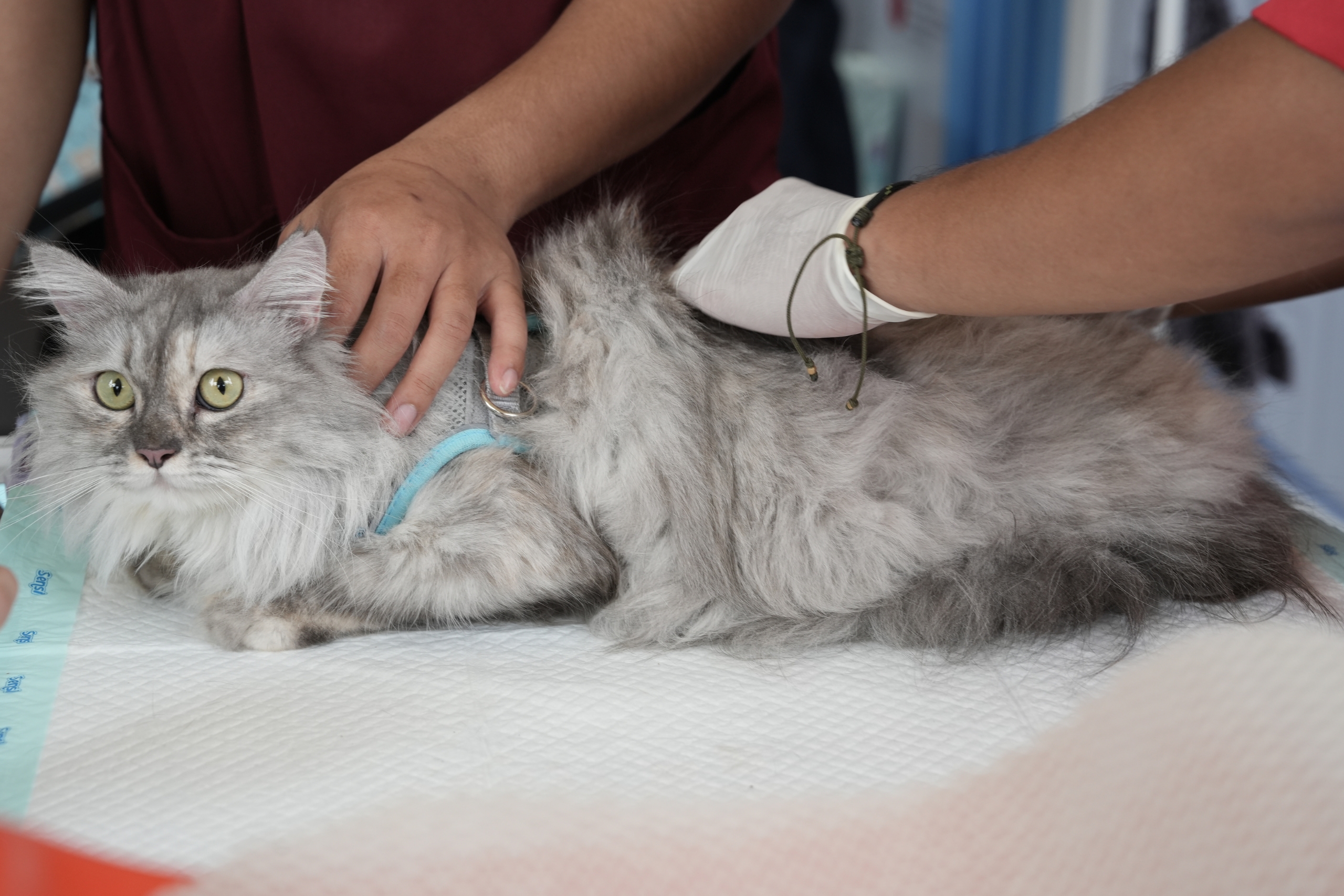
The earliest observable sign of feline pregnancy is the pinking and swelling of the nipples — a change that typically becomes visible from approximately two to three weeks after conception and is most reliably detected by the owner whose regular handling of their cat has established the familiarity with the animal’s normal physical state that makes the subtle early change more immediately noticeable than it would be to someone with less daily contact. The behavioural changes that commonly accompany early pregnancy — increased affection and clinginess toward the owner, a mild increase in sleep duration, and in some cats a brief period of morning nausea that manifests as reduced appetite or occasional vomiting during the third to fourth week — provide further early indicators whose combination with the physical nipple changes creates the cluster of observations that should prompt the veterinary consultation whose professional assessment provides the most reliable pregnancy confirmation available. From approximately three to four weeks of gestation, an experienced veterinarian can confirm pregnancy by palpating the abdomen whose developing kittens are detectable as distinct, walnut-sized structures in the early to mid-pregnancy period — a finding that establishes both the pregnancy confirmation and, with experience, a rough litter size estimate whose information begins the planning process for the birth and the post-natal period.
Ultrasound examination — available at most veterinary practices and providing both pregnancy confirmation and the assessment of foetal heartbeats that establishes viability — is the most informative diagnostic tool available for early feline pregnancy assessment, enabling confirmation from approximately twenty-five days of gestation and providing the visual assessment of foetal development whose quality and whose viability indicators guide the veterinary management recommendations for the remainder of the pregnancy. Radiographic examination in later pregnancy — from approximately forty-five days onward when the foetal skeletal mineralisation has progressed sufficiently to create the bone density that radiographic imaging can detect — provides the most accurate available litter count whose knowledge is particularly valuable in planning the birth management and in recognising the completion of delivery whose confirmation that all kittens have been born is the most important single piece of information in managing the immediate post-partum period safely.
Nutrition During Pregnancy: Feeding for Two — or Five
The nutritional requirements of the pregnant cat change significantly across the gestation period in ways that make the dietary adjustments whose implementation begins from the point of pregnancy confirmation among the most practically important contributions to kitten health and maternal welfare available to the cat owner. The energy and protein requirements of feline pregnancy increase progressively as the developing kittens make increasing demands on the mother’s nutritional resources — and the specific dietary management that meets these increasing demands without the overfeeding that produces excessive maternal weight gain and its associated complications requires both the understanding of what nutritional changes pregnancy creates and the practical knowledge of how to meet those changes through the available dietary options.
The most significant nutritional shift recommended for pregnant cats is the transition from adult maintenance diet to a kitten food or a specifically formulated gestation and lactation diet — whose higher energy density, higher protein content, and higher levels of the specific micronutrients including calcium, phosphorus, and the essential fatty acids whose demands are elevated in pregnancy and lactation create the nutritional profile most appropriate for the pregnant cat’s changing requirements. Kitten food is the most widely recommended dietary choice for pregnant queens because its formulation for the high-growth nutritional demands of rapidly developing kittens is closely matched to the nutritional requirements of the mother cat whose own metabolic demands during pregnancy and subsequent lactation most closely resemble those of the growing kitten. The transition to kitten food should ideally begin from the point of pregnancy confirmation — or from approximately three to four weeks of gestation when the foetal demand on maternal nutrition begins to increase significantly — and should be managed as a gradual dietary transition rather than an abrupt change whose disruption of the established digestive routine can cause the gastrointestinal upset that dietary changes in cats most commonly produce when implemented without the seven to ten day transition period whose mixture of old and new food allows the digestive adaptation that minimises disruption.
Caloric intake management across the gestation period should reflect the progressive increase in the pregnant cat’s energy requirements — from approximately a ten percent increase above maintenance in early pregnancy through a twenty-five to fifty percent increase in the final weeks of gestation as the rapidly growing kittens create their greatest demand on maternal energy reserves. Free-choice feeding — allowing the pregnant queen continuous access to food rather than restricting feeding to scheduled meal portions — is the approach most consistently recommended for pregnant cats whose self-regulation of intake is generally reliable and whose ad libitum access to food ensures that the increasing energy demands of late pregnancy are met without the owner needing to continuously adjust portion sizes in response to the changing requirements that the advancing gestation creates. Fresh water availability is as important as food quality in the pregnant cat’s nutritional care — the increased metabolic demands of pregnancy create increased fluid requirements whose adequate provision through the continuous availability of clean, fresh water is the simplest and the most directly important hydration management available.
Veterinary Care and Health Monitoring Throughout Pregnancy
The veterinary care of the pregnant cat encompasses both the scheduled monitoring visits whose assessment of maternal health and foetal development provides the professional oversight that responsible breeding and responsible pet ownership requires, and the awareness of the specific signs and symptoms that indicate the complications whose prompt veterinary attention is genuinely urgent rather than merely advisable for the welfare of the mother and the kittens whose health depends on early intervention when problems develop. In the broader landscape of pet care, few responsibilities are more concentrated in their demands than those of pregnancy monitoring — a period where consistent professional oversight and attentive daily home observation together create the safety net that every pregnant cat deserves. The cat owner who maintains appropriate veterinary monitoring throughout pregnancy and who responds promptly to the warning signs that veterinary attention is needed is the owner whose pregnant cat is most likely to proceed through gestation and birth without the serious complications that inadequate monitoring and delayed veterinary response allows to develop beyond the point where effective intervention remains possible.
The pre-pregnancy health assessment — ideally conducted before breeding in the case of planned pregnancies or as early as possible in the case of unplanned ones — should include the verification of vaccination status whose currency is important both for the mother’s protection and, through the colostral immunity transfer, for the kittens’ early passive protection against the specific diseases that vaccination prevents. The specific consideration of vaccination timing in relation to pregnancy is important — the modified live vaccines used for feline distemper, herpesvirus, and calicivirus are not recommended for administration during pregnancy due to the theoretical risk of foetal infection from attenuated vaccine strains, making the pre-pregnancy vaccination check and the updating of any lapsed vaccines before breeding the most appropriate management strategy. Parasite treatment during pregnancy requires veterinary guidance for each specific product — some antiparasitic medications including certain dewormers and some flea treatments are safe for use in pregnant cats while others are specifically contraindicated, and the replacement of the routine parasite prevention products used before pregnancy with the specific pregnancy-safe alternatives that the veterinarian recommends prevents both the risk of parasite burden during pregnancy and the teratogenic risks that the contraindicated products create.
The warning signs during pregnancy that require immediate veterinary contact include vaginal discharge of any colour or consistency other than the clear or slightly blood-tinged mucus that is normal in late pregnancy, significant lethargy or refusal to eat persisting beyond twenty-four hours, visible abdominal pain or distress, fever above 39.5 degrees Celsius, and any straining or other signs of premature labour before the fifty-eighth day of gestation whose occurrence indicates a complication requiring emergency veterinary assessment. The regular home monitoring that allows early detection of these warning signs — the daily observation of the pregnant cat’s behaviour, appetite, and physical condition whose consistent attention creates the baseline familiarity with her normal pregnancy state that makes deviations immediately apparent — is the most practically accessible maternal health monitoring available between veterinary consultations and the most important daily responsibility of the cat owner whose pregnant animal depends on the quality of their observation for the early identification of the complications whose management outcomes improve dramatically with early detection and prompt treatment.
Preparing the Environment: Creating the Perfect Nesting Space
The environmental preparation for the birth of kittens is among the most important and the most practically satisfying aspects of pregnant cat care — the creation of the specific nesting space whose qualities of warmth, security, privacy, and appropriate dimensions create the conditions under which the queen is most likely to birth and nurse her kittens comfortably, to remain calm and confident through the labour process, and to bond effectively with her offspring in the critical early hours after birth whose maternal behaviour establishes the foundation for the kittens’ developmental wellbeing throughout their first weeks of life. The nesting space preparation whose timing — beginning approximately two weeks before the expected delivery date — allows the queen to investigate, accept, and begin to identify with the birthing location before the onset of labour creates the familiarity and the security that the most settled and the most behaviourally confident births are associated with.
The kittening box — the specific enclosure whose dimensions, materials, and positioning create the optimal birthing environment — can be purpose-purchased from pet suppliers or constructed from materials available in any household, with the large cardboard box whose access hole is cut at adult cat height but whose interior dimensions provide adequate space for the queen to move, lie, and nurse comfortably being the most widely used and the most practically accessible home-made alternative to commercial kittening facilities. The specific box dimensions most appropriate for a single cat birth range from approximately sixty centimetres by forty-five centimetres for smaller breed cats to considerably larger for bigger breeds — large enough for the queen to lie fully extended with space remaining for the kittens she will be nursing, but enclosed enough to provide the den-like security that the nesting instinct whose intensity in the days before birth reflects the queen’s specific need for the enclosed, private birthing environment that her evolutionary heritage has prepared her to seek. The interior lining of the kittening box with layers of clean newspaper — whose absorption of the birth fluids whose quantity during delivery makes impermeable bedding a practical necessity, and whose easy replacement after birth creates the clean, dry environment that the neonatal kittens’ temperature regulation inability makes essential for their survival in the first weeks of life — provides the most practical and the most easily maintained bedding solution available for the immediate birth environment.
Temperature maintenance in the kittening area is the most critical environmental factor for the survival of the neonatal kittens whose inability to regulate their own body temperature in the first weeks of life makes the ambient warmth of their environment the primary determinant of their thermal comfort and their energy expenditure. The room temperature of the kittening area should be maintained at a minimum of twenty-two degrees Celsius — with the specific kittening box interior preferably warmer at approximately twenty-seven to twenty-nine degrees Celsius in the first week, achievable through the strategic placement of a heat pad or a low-wattage heat lamp whose positioning at one side of the box rather than covering its entire floor allows the queen and the kittens to self-regulate their proximity to the heat source according to their individual thermal comfort needs.
The Birth Process: What to Expect and When to Seek Help
Understanding what a normal feline birth looks like — the specific stages of labour, the expected intervals between kitten deliveries, the normal appearance and behaviour of each delivered kitten, and the normal post-partum behaviour of the queen — is the preparation that allows the attending owner to provide the supportive presence and the quiet observation that uncomplicated feline births most appropriately receive, while also recognising the specific departures from the normal birth pattern that indicate complications requiring immediate veterinary intervention. The cat owner whose calm, knowledgeable presence during the birth creates neither the intrusive interference that distresses the labouring queen nor the absent inattention that allows undetected complications to progress to emergencies is the most valuable support available in the birthing room and the support whose quality most directly determines the outcome of the birth for the mother and the kittens whose welfare depends on both her autonomous management of the process and the availability of the human support whose timely provision makes the difference between the complication managed and the complication missed.
The stages of normal feline labour begin with the pre-labour period of nesting behaviour intensification, restlessness, and the beginning of uterine contractions whose visible manifestation as periodic abdominal tightening and the queen’s increasingly focused attention on the kittening box indicate the approach of active labour. The active labour phase — whose first kitten delivery typically occurs within sixty minutes of the onset of visible straining, and whose subsequent kitten deliveries follow at intervals of fifteen minutes to one hour in uncomplicated multiple-kitten births — produces each kitten in the amniotic sac whose rupture the queen performs immediately after delivery by licking vigorously, simultaneously stimulating the newborn kitten’s breathing and severing the umbilical cord through the combination of licking and biting that serves both functions simultaneously. The normal newborn kitten — whose prompt vocalisation, vigorous movement, and immediate seeking of the nipple for the first nursing that provides the colostrum essential for passive immunity establishment indicates healthy transition to extra-uterine life — is the kitten whose minimal human intervention requirement contrasts with the kitten who is silent, limp, and non-responsive whose resuscitation by gentle vigorous rubbing and the careful clearing of the airways whose obstruction by birth fluids may be preventing breathing requires the prompt but calm intervention whose technique any prepared cat owner should have researched and understood before the birth begins.
The specific birth complications that require immediate veterinary contact include the queen straining actively for more than sixty minutes without producing a kitten, visible distress or apparent exhaustion in the queen before all kittens are delivered, the delivery of a dead kitten with no subsequent kitten delivered after thirty minutes of renewed straining, vaginal haemorrhage beyond the normal level of bloody discharge that accompanies kitten delivery, and the queen’s post-partum fever or refusal to nurse whose combination suggests the infection or the complications that require prompt professional assessment and treatment for both the mother and the kittens whose welfare depends on her rapid recovery of the health and the nursing behaviour that their first-week survival requires most completely and most urgently.
Conclusion
Caring for a pregnant cat is a responsibility whose fulfilment through the specific nutritional, environmental, veterinary, and birth management care described throughout this guide provides the most complete available support for the health and the wellbeing of both the mother cat and the kittens whose successful birth and healthy early development are the ultimate measure of the care provided in every preceding week of the gestation. The early veterinary confirmation of pregnancy and the establishment of the monitoring schedule whose professional oversight identifies complications early, the dietary adjustments whose specific nutritional provisions meet the increasing demands of the advancing pregnancy, the environmental preparation whose kittening box and temperature management create the optimal birth and neonatal environment, and the informed, calm, attentive presence during the birth itself whose combination of supportive quiet observation and prompt response to complications provides the most appropriate human involvement in the natural process whose management the queen’s own instincts most competently provide in uncomplicated cases together constitute the complete care framework whose consistent, knowledgeable, and genuinely caring application gives every pregnant cat and every kitten she carries the best possible start to the lives whose wellbeing depends so directly on the quality of the care and the love that surround them from the earliest days of their extraordinary development.